The Stars Said No Cat Sticker: A Designer’s Embroidery Review
When I scroll through new design drops looking for that next big hit for my shop, I am usually scanning for clarity, charm, and commercial viability. The Stars Said No Cat Sticker caught my eye not just because of the humor, but because of its potential as a wearable statement piece. As an embroidery designer who has stitched hundreds of files for clients ranging from boutique owners to hobbyists, I look at a graphic and immediately start visualizing the stitch-out. Does it translate? Will it hold up on a sweatshirt? Is it too busy for a small hoop?
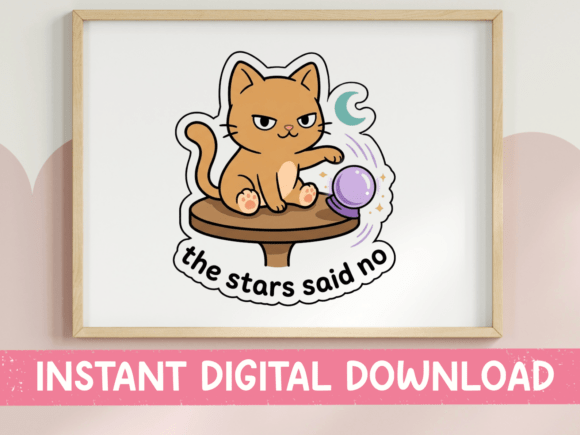
This particular design features a scowling orange tabby sitting at a small wooden table, pawing at a crystal ball or fortune-telling setup. It is aimed squarely at astrology skeptics and self-aware cat lovers who love to blame the universe for their misfortunes. From a professional standpoint, this mood is incredibly marketable. But does the execution work in thread? Here is my practical breakdown of how this design performs in real-world embroidery projects.
First Impressions: Mood and Visual Personality
The immediate appeal of The Stars Said No Cat Sticker is its attitude. In the world of handmade products, personality sells. A generic cat is nice; a grumpy fortune-teller cat that rejects fate is a conversation starter. Visually, the layout centers around a strong character focus. The orange tabby provides a warm, high-contrast base color that naturally pops against most fabric backgrounds, which is a huge advantage for embroidery where you cannot rely on subtle gradients like you can in digital printing.
The composition feels balanced for apparel decoration. The horizontal nature of the "sitting at a table" pose suggests it works well across the chest of a t-shirt or centered on the front of a hoodie. However, as a designer, I am always wary of designs that look good on a screen but fall apart when digitized. The key here is the facial expression and the props. If the details are too fine, they will disappear into the fuzz of a fleece sweatshirt or get lost in the weave of a canvas tote. Fortunately, the bold lines typical of sticker-style graphics tend to digitize well, provided the file is set up correctly.
Real-Life Application: Where This Design Shines
I have been thinking about specific use cases for this design, and there are several natural fits for T-Shirt Designs and broader Graphics categories. Let’s look at how it translates to actual products.
- Custom Apparel and Sweatshirts: This is the strongest candidate. A crewneck sweatshirt in navy, black, or heather gray with this design embroidered in bright orange and white threads creates a striking contrast. The humor lands better on casual wear than formal attire. For Etsy sellers, this is a perfect niche product targeting the "witchy but skeptical" demographic.
- Tote Bags and Canvas Totes: A sturdy cotton canvas bag is another excellent venue. The durability of the fabric handles the density of a fill stitch well. Imagine a beige tote with the scowling cat in vibrant threads—it becomes a functional accessory that doubles as a personal brand statement for the wearer.
- Baby and Nursery Items: There is a surprising demand for sassy pet designs in baby gear. A onesie or a burp cloth featuring this design could be a hilarious gift for parents who appreciate dry humor. The softness of baby fabrics requires careful stabilizer selection to avoid bulk, but the result is a unique personalized gift that stands out in a sea of cute, sweet animal designs.
- Holiday Gifts and Seasonal Decor: While not explicitly holiday-themed, the "fortune teller" aspect plays well during winter holidays when people are looking for quirky stocking stuffers or secret Santa gifts. It also works surprisingly well for April Fools’ Day or any time someone needs a morale boost.
Technical Considerations and Stitch Quality
Before committing to production runs, any experienced embroiderer knows you must test the machine embroidery design. Here is what to watch out for with The Stars Said No Cat Sticker.
Stitch Density and Detail: The design likely uses a mix of satin stitch for outlines and text, and fill stitch for the cat’s fur and the table. Check the stitch density carefully. If the fill areas are too dense, the fabric may pucker, especially on lightweight materials. If they are too sparse, the backing material might show through. Ensure the running stitch elements (like whiskers or table legs) are long enough to prevent tangling but short enough to stay crisp.
Thread Color Contrast: The orange tabby needs to stand out. On dark fabrics, you will need a solid underlay or a lighter base thread to make the orange pop. On light fabrics, the orange might blend in if the lighting is poor. Always check your thread colors against your fabric swatches. I recommend testing in black and white mockups first to ensure the value contrast is sufficient.
Hoop Size and Placement: Confirm the required hoop size before listing the item. If the design is large, it may limit the types of garments you can produce. Small hoops are versatile, but large designs can restrict placement on sleeves or small baby items. Make sure the design fits comfortably within standard 4x4, 5x7, or 6x10 inch hoops depending on your machine capabilities.
Where to Use Caution
Not every surface is suitable for this level of detail. Avoid using this design on highly textured fabrics like chunky knits or boucle, as the stitches will sink into the texture and lose definition. Thin fabrics like silk or sheer chiffon require heavy stabilization and may still pucker. Stretchy fabrics like spandex blends need a stretch-specific stabilizer to prevent distortion.
Also, be cautious with curved surfaces like caps or hats. While possible, the curvature can distort the perspective of the "table" element, making the cat look like it is sliding off. Flat surfaces like tote bags, pillows, and flat-lay apparel yield the best results. Additionally, if you plan to wash these items frequently, ensure the design is anchored properly to prevent fraying or thread breakage over time.
Commercial Viability and Brand Consistency
For Etsy sellers and small business owners, the question is always: "Will this sell?" Humor-based designs have high shareability. Customers love to post photos of their unique, funny embroidered items on social media. This organic marketing potential adds value beyond the product itself. The Stars Said No Cat Sticker taps into a specific subculture, which helps in targeting ads and keywords effectively.
However, professionalism matters. Ensure your digitization is clean. Loose threads, visible backing, or misaligned elements can hurt customer trust. Use proper stabilizer techniques to keep the back of the garment neat. Whether you are selling physical goods or digital embroidery files, the quality of the stitch-out reflects on your brand. If you are offering this as a design asset or printable mockup, make sure the preview images accurately represent the final stitched look so buyers know what to expect.
Final Verdict
The Stars Said No Cat Sticker is a strong contender for anyone looking to add personality to their embroidery lineup. It balances humor, visual appeal, and commercial potential effectively. By paying attention to stitch density, fabric choice, and proper stabilization, you can create high-quality handmade products that resonate with customers. Just remember to test thoroughly on scrap fabric first, confirm your licensing rights for commercial embroidery use, and present the finished product with pride. It is a design that doesn’t just decorate fabric—it tells a story.