Winged Key Tattoo Style Sticker Review
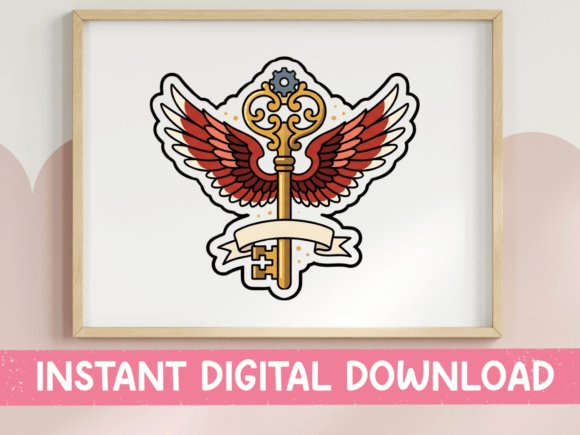
As a designer who spends half her life staring at stitch maps and the other half troubleshooting tension issues on vintage denim, I don’t just look at a design file; I look at its potential to survive the hoop. When I first pulled up Winged Key Tattoo Style Sticker, my initial reaction was less about the aesthetic and more about the engineering of the image itself. This isn’t your average clip-art key. It is a bold, tattoo-inspired graphic that demands attention, featuring a gold ornate key with a small gear detail at the top and spreads bold red and orange eagle wings.
The premise is strong: a magical twist on a classic symbol. But for those of us in the craft business or running an Etsy seller shop, the question is always the same: does this translate well from screen to fabric? Can it hold up as a handmade product that customers will actually wear or display, or will it turn into a tangled mess after one wash cycle? Let’s break down how Winged Key Tattoo Style Sticker performs in real-world scenarios, from custom apparel to boutique branding.
First Impressions: Mood and Visual Personality
The immediate vibe of Winged Key Tattoo Style Sticker is edgy yet whimsical. The tattoo style implies sharp lines and high contrast, which is generally good news for embroidery because clean shapes are easier to digitize than fuzzy gradients. The inclusion of the gear detail adds a steampunk-adjacent texture that suggests complexity without necessarily requiring excessive thread count if handled correctly.
Visually, the design feels balanced. The wings spread outward, creating a natural width that works well for chest placements on sweatshirt embroidery or centered layouts on tote bags. However, the "tattoo" aspect means there are likely intricate linework elements. In embroidery, fine lines can sometimes disappear or bleed into each other depending on the stitch density. The color palette—gold, red, and orange—is warm and energetic, perfect for grabbing attention in a crowded market like Etsy or a craft fair booth.
Real-Life Application: From Digital File to Finished Product
I recently considered using Winged Key Tattoo Style Sticker for a batch of custom embroidered patches intended for a client’s denim jacket line. Here is how I evaluated its performance across different categories of custom apparel.
Tote Bags and Canvas Projects
This is perhaps the strongest use case. A tote bag design benefits from the boldness of the winged key. Because canvas is stable and has some weight to it, the machine embroidery design will sit flush without pucker. The red and orange wings would pop beautifully against a natural canvas or a black cotton blend. For small shop product owners, this is a versatile asset. It appeals to book lovers, travelers, and fans of alternative art styles simultaneously.
Sweatshirts and Heavy Apparel
When thinking about sweatshirt embroidery, placement is key. The horizontal spread of the wings makes it ideal for a standard left-chest placement or a full-back statement piece. However, sweatshirt fabric (especially fleece-backed hoodies) can be tricky. You need a heavy-duty stabilizer to prevent the fill stitch areas of the wings from sinking into the pile. If you are selling these as gifts, ensure the final product feels substantial. A poorly stabilized embroidery project on a hoodie looks cheap, regardless of how cool the design is.
Patches and Accessories
Converting Winged Key Tattoo Style Sticker into an embroidered patch is a smart move. Patches allow you to control the background, meaning you can add a solid border color that ties the gold and red together. These work exceptionally well as accessories on backpacks, aprons, or even baby caps. For baby embroidery, the key symbolizes unlocking potential or finding one’s way, making it a meaningful gift for new parents, provided the details aren’t too sharp or aggressive for a nursery theme.
Where to Exercise Caution
No design is perfect for every situation. There are specific contexts where Winged Key Tattoo Style Sticker might struggle, and knowing these boundaries protects your reputation as a creator.
- Small Hoop Sizes: If you are working with limited space, such as a baseball cap front panel or a small breast pocket, the intricate gear detail and feather textures of the wings may become muddy. Fine details often get lost when scaled down too far. Always test the hoop size compatibility before committing to production.
- Textured and Stretchy Fabrics: Avoid placing this design on ribbed knits, loose weaves, or highly textured fabrics like bouclé. The stabilizer needs a smooth surface to anchor the stitches. On stretchy fabrics, the satin stitch edges of the key and wings may distort, leading to gaps or puckering.
- Dense Stitch Areas: The wings likely require significant fill stitch coverage. If the digitization doesn’t manage the underlay properly, you risk creating a stiff, board-like texture. This is particularly noticeable on lightweight t-shirts or delicate blouses where drape matters.
- Dark Fabric Contrast: While the gold and red are vibrant, ensure they have enough contrast against your base fabric. On navy blue, the red might blend in slightly; on black, the gold will shine. Always check thread color contrast against your actual material stock.
Design Notes for the Professional Embroiderer
To get the most out of this digital embroidery file, I recommend a few practical steps before you start stitching hundreds of units.
- Test on Scrap Fabric: Never assume a design will work perfectly on your target material. Stitch a sample on the exact fabric you plan to sell. Check for thread breaks, especially in the tight curves of the gear detail.
- Review Stitch Density: Look closely at the wing feathers. Are they represented by individual satin stitches or a fill pattern? If the density is too high, the fabric will pucker. If it’s too low, the backing material might show through. Adjusting the trim settings or adding a tear-away stabilizer can help.
- Black and White Mockup: Convert the design to grayscale to check the value distribution. Does the key stand out from the wings? Is the negative space clear? This helps ensure the design reads well even if the colors are muted in certain lighting.
- Stabilizer Selection: For woven fabrics like cotton or linen, a cut-away stabilizer is usually best for durability, especially for items that will be washed frequently. For non-wovens or temporary projects, a tear-away might suffice, but cut-away ensures the finished product maintains its shape over time.
- Licensing and Commercial Use: Before listing this as a design asset or selling finished goods, verify the licensing terms. Some graphics are restricted to personal use only. As a creative entrepreneur, protecting your intellectual property rights is just as important as the quality of the stitch.
Final Verdict: Value and Appeal
Winged Key Tattoo Style Sticker is a standout choice for designers looking to tap into the alternative, bohemian, or steampunk aesthetics. It bridges the gap between applique design flair and traditional embroidery precision. The visual appeal is high, making it suitable for personalized gift markets, wedding favors for quirky couples, or boutique branding for shops that cater to artistic demographics.
For Etsy sellers and small business owners, this design offers versatility. It works as a standalone statement piece or as part of a larger collection (perhaps paired with other mystical or mechanical motifs). The key takeaway is that while the design is visually striking, its success depends entirely on proper digitization execution and fabric selection. When done right, it transforms from a simple sticker concept into a premium embroidery project that customers will be proud to own.
If you are ready to expand your catalog with designs that feel both timeless and edgy, Winged Key Tattoo Style Sticker is a strong candidate. Just remember: the magic happens not just in the pixels, but in the precision of your machine and the care you put into the finishing touches.