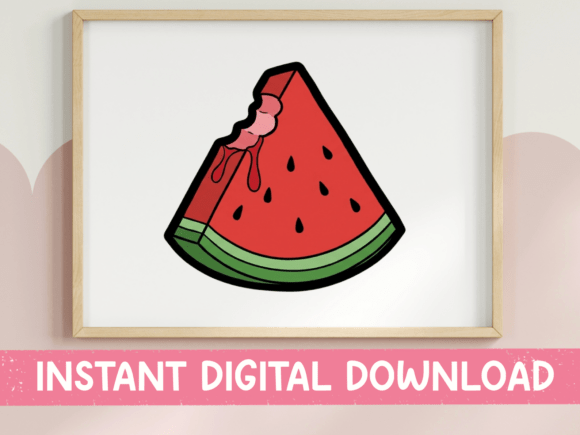
Watermelon Slice SVG Embroidery Review
As a designer who spends more time than I care to admit staring at stitch density charts and testing thread tension, I approach every new embroidery file with a healthy dose of skepticism. We all know the drill: a design looks stunning in a digital preview but turns into a muddy, puckered mess once it hits the hoop. That is exactly why I decided to put this specific machine embroidery design through its paces. The product in question is the Watermelon Slice SVG, a graphic that promises bold cartoon aesthetics with a playful twist. My goal here isn't just to tell you what it looks like on screen, but to evaluate how it translates into a tangible, sellable handmade product.
First Impressions and Visual Personality
The moment you load the graphics into your digitizing software, the mood is set immediately. This isn’t a subtle, botanical watercolor illustration; it is a bold, high-contrast cartoon slice. The description highlights a big bite taken out of the top, with pink juice dripping down bright red flesh, anchored by a green rind and dotted with black seeds. From a design perspective, this offers a fantastic opportunity for color blocking. The "bite" creates an organic, irregular edge that breaks up the symmetry, which is always a nice touch for keeping a finished product from feeling too rigid or mass-produced.
The visual personality screams summer, fun, and casual comfort. It feels right at home on a tote bag design for a beach day or as a cheerful accent on a baby onesie. However, the "sticker" aesthetic mentioned in the source material suggests a clean, outlined look that relies heavily on good definition. If the edges aren't crisp, the cartoon vibe can quickly turn into a blurry blob. As an experienced reviewer, my first concern was always going to be the transition between the red flesh and the green rind—two colors that can sometimes vibrate visually if not separated properly.
Real-World Application: The Custom Tote Bag Scenario
To truly test this design, I imagined using it for a practical project: a custom embroidered tote bag for a local farmer’s market vendor or a boutique shop owner. This is a classic use case for Etsy sellers and small business merchandise. The challenge with tote bags is that they are often made of canvas or cotton duck, fabrics that have a significant texture. A dense fill stitch can struggle to lay flat on such surfaces, leading to needle deflection and skipped stitches.
In this scenario, the Watermelon Slice SVG performs surprisingly well because of its simplified geometry. The large areas of solid color (the red and green) allow for efficient fill stitch coverage, while the dripping juice elements offer a chance to showcase a lighter, perhaps satin-based outline. For a custom apparel item like this, the design reads clearly even from a distance. Customers walking past a craft fair booth will instantly recognize the shape. It doesn't require them to squint to understand the theme, which is crucial for impulse buys. The playful nature of the dripping juice adds a narrative element—it’s not just fruit; it’s juicy, fresh, and ready to eat. This storytelling aspect boosts buyer engagement significantly compared to a static, symmetrical logo.
Performance on Different Garments and Surfaces
While the tote bag is a strong candidate, this design has versatility across other categories. Let’s look at sweatshirt embroidery. A cropped hoodie with a small, left-chest watermelon slice is a trendy look for teens and young adults. Here, the stitch density becomes critical. If the design is too dense, the sweatshirt fabric will pucker around the hoop area, ruining the drape of the garment. I would advise checking the underlying structure of the digital embroidery file to ensure the underlay stitches are sufficient to stabilize the knit fabric without causing bulk.
Another excellent application is apron decoration. A kitchen apron featuring this design fits perfectly with the "home cook" aesthetic. The bright colors pop against white or light gray apron fabric, making it an ideal personalized gift for birthdays or holidays. Similarly, for baby embroidery, such as on muslin blankets or bibs, the soft, rounded shapes are appropriate and charming. However, when working with thin fabrics like muslin, you must be vigilant about stabilizer choice. A tear-away stabilizer might leave residue, so a cut-away backing is often safer for delicate items to ensure the embroidery project remains soft to the touch.
Caps and Curved Surfaces
Applying this to a cap or hat introduces curvature challenges. The flat front panel of a dad hat or a structured baseball cap can handle this design well, provided the hoop size allows for a flat stitching area. The circular nature of the watermelon slice actually works in our favor here, as it naturally conforms to the slight curve of the cap front better than a sharp, angular geometric shape would. Just ensure the thread colors contrast enough against the cap fabric; a dark navy cap might swallow the red details unless a bright white outline is used.
Where to Use Caution
No design is perfect for every situation, and there are specific contexts where the Watermelon Slice SVG might struggle. First, avoid using this on highly textured fabrics like heavy wool or boucle. The intricate details of the seeds and the drip lines will get lost in the weave of the fabric. Second, be cautious with small hoop sizes. If you attempt to scale this down too much for a tiny patch or a shoe tongue, the black seeds may merge into the red flesh, losing their definition entirely. In such cases, the design loses its impact and may look like a simple red circle rather than a watermelon slice.
Additionally, consider the washing durability. For products that need frequent washing, such as children's clothes or kitchen towels, the stability of the satins stitch outlining the juice drips is vital. If the satin stitch is too long, it can snag. Always inspect these fine details before committing to a large production run.
Practical Designer Notes for Execution
Before you start stitching, there are several technical steps every professional should take. First, test the design on scrap fabric that matches your final product in weight and texture. This saves you from ruining expensive materials due to unexpected tension issues. Second, review the stitch density in your software. If the red fill area is excessively dense, consider adding some negative space or adjusting the stitch angle to reduce bulk.
It is also wise to inspect the design in black and white mockups. This helps you verify that the contrast between the red, green, and black elements is sufficient for readability. If the colors blend together in grayscale, they might lack punch in real life. Furthermore, confirm whether the license terms allow for commercial use. Many design assets come with restrictions on how many finished items you can sell. Ensure you have the rights to create commercial embroidery products before listing them on Etsy or your own website.
Final Verdict
The Watermelon Slice SVG is a versatile, cheerful addition to any craft business inventory. Its bold cartoon style ensures high recognition, and its simple geometry makes it forgiving for both beginners and seasoned embroiderers. Whether you are creating holiday gifts, summer accessories, or branding materials for a boutique, this design delivers on its promise of visual appeal. By paying attention to fabric choice, stabilizer support, and stitch quality, you can transform this digital graphic into a professional, profitable handmade product that customers will love.